By Shawn Regan, Senior Fellow at the Manhattan Institute
The Trump administration recently proposed reforms to correct one of the act’s most counterproductive aspects. Environmental groups responded with fury in the predictable ritual that accompanies any re-examination of the law. “Trump’s proposals are a death sentence for wolverines, monarch butterflies, Florida manatees and so many other animals and plants that desperately need our help,” said Stephanie Kurose of the Center for Biological Diversity. Fundraising emails warned of mass extinctions. Critics lamented that protections were being “gutted.”
These warnings don’t match reality. The proposed changes aren’t a rollback. Instead, they codify a lesson that Democratic and Republican administrations alike have learned: Rigid, one-size-fits-all regulations can backfire, and that species recover faster when local communities have a reason to help rather than fear federal enforcement.
At the center of the debate is the act’s “blanket rule,” which automatically applies the strictest “endangered”-level protections to all threatened species unless the U.S. Fish and Wildlife Service creates a species-specific rule saying otherwise. That approach may sound protective, but it erases the crucial distinction between “endangered” and “threatened” species that Congress originally built into the law. If a species faces no change in regulation when it moves from endangered to threatened, why invest in recovery?
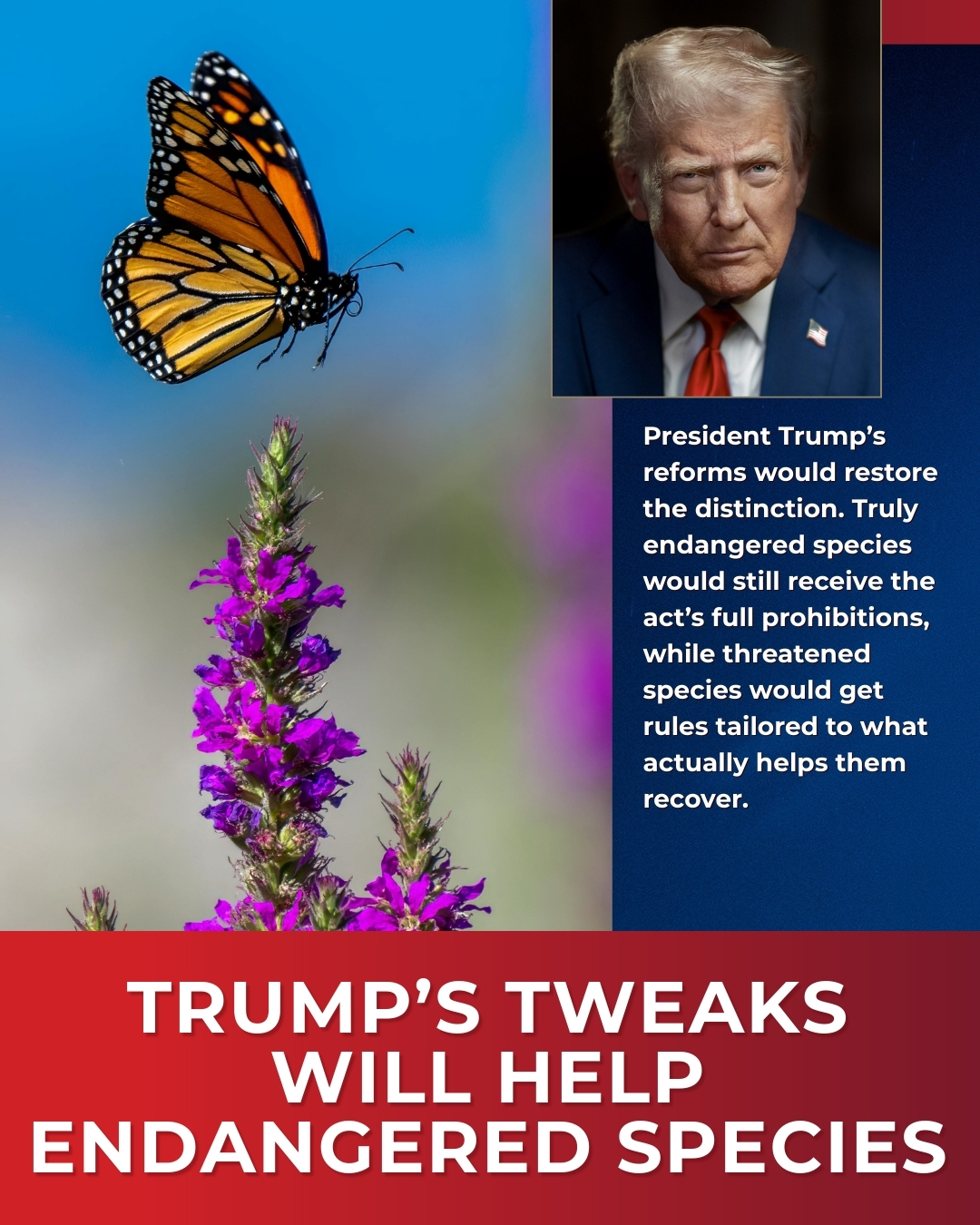
President Trump’s reforms would restore the distinction. Truly endangered species would still receive the act’s full prohibitions, while threatened species would get rules tailored to what actually helps them recover. This shift largely formalizes what the Biden administration had already been doing. When presented with real-world conservation dilemmas, Biden regulators repeatedly chose flexibility over rigidity—and did so for the same species environmentalists now claim are doomed.
Consider the monarch butterfly. When Biden officials proposed listing the monarch as threatened last December, they issued a special rule exempting routine farming, ranching, mowing and gardening—activities that could unintentionally harm individual butterflies but benefit the species overall by maintaining diverse habitats. They did so because they recognized that strict prohibitions could backfire, leading landowners to destroy milkweed, a plant that monarchs need to survive. Monarchs depend on everyday people—farmers, gardeners and city planners—planting milkweed and protecting pollinator spaces, so their recovery depends on cooperation, not coercion.
Likewise with the wolverine. When the Biden Fish and Wildlife Service listed the species as threatened in 2023, the agency crafted a flexible rule allowing forest management and wildfire prevention in its habitat. Without those exemptions, fuels-reduction projects that protect wolverine habitat from catastrophic fire would grind to a halt, directly threatening the species.
What environmentalists now call a death sentence is precisely the approach the Biden administration used for monarchs and wolverines. Mr. Trump’s proposal would simply require all threatened species to receive the same treatment.
The Florida manatee demonstrates the pitfalls of the blanket-rule approach. After decades of investment by local communities and the state, the manatee population rose from about 1,200 in the 1970s to more than 9,000 today. Federal regulators moved the species from endangered to threatened in 2017, yet the blanket rule stayed in place, meaning nothing changed. Florida’s reward for success? The same red tape as before.
The Trump reforms remove that perverse incentive. By requiring tailored protections for threatened species—and eventually revisiting old blanket ones—the new rules will ensure recovery pays off for those who make it happen. None of this weakens the Endangered Species Act’s core protections. What changes is the assumption that maximum punishment always equals maximum conservation.
Go here to read the Administration’s Endangered Species Act Regulations to Strengthen Certainty, Reduce Burdens and Uphold the Law.