American Stewards of Liberty (ASL) is calling on Congress to include a provision in the upcoming budget reconciliation package that would require endangered species listings to automatically expire after ten years unless federal regulators take formal action to justify continued protection.
The proposal would fundamentally reshape how the Endangered Species Act is implemented by introducing a built-in accountability mechanism that requires a hard-look at whether a species is recovered rather than allowing listings to persist indefinitely.
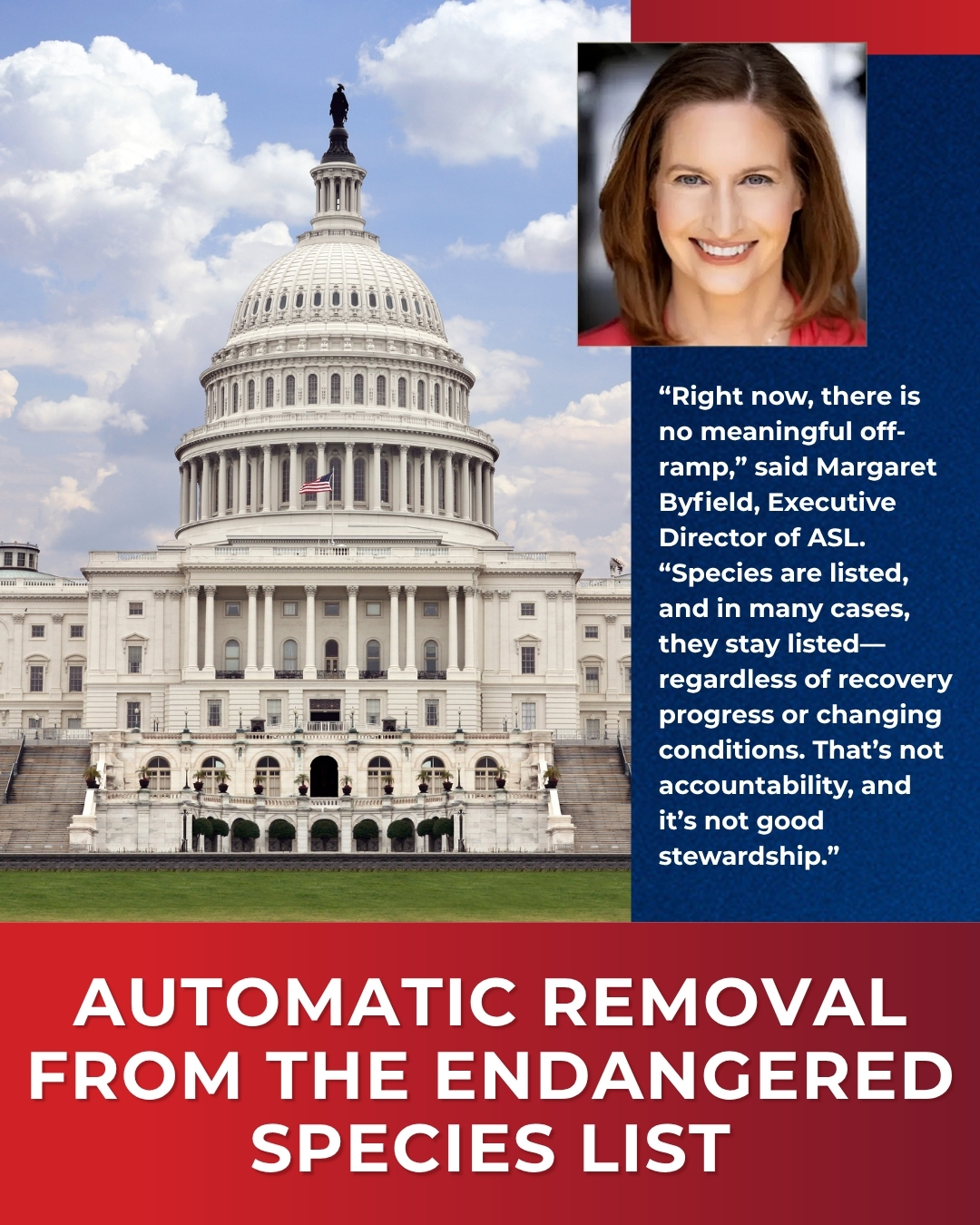
“Right now, there is no meaningful off-ramp,” said Margaret Byfield, Executive Director of ASL. “Species are listed, and in many cases, they stay listed—regardless of recovery progress or changing conditions. That’s not accountability, and it’s not good stewardship.”
Under ASL’s recommendation, the U.S. Fish and Wildlife Service would be required to complete a new rulemaking at the end of each ten-year period to demonstrate that continued listing is warranted. Absent that action, the species would be automatically delisted.
The organization argues that the current system creates little institutional incentive to demonstrate recovery or remove species from the list, effectively turning what was intended to be a temporary protection into a permanent regulatory designation.
“This is about restoring credibility to the law,” Byfield said. “If recovery is the goal, then the system should be structured to achieve and recognize it—not avoid it.”
ASL said reconciliation provides Congress with a timely legislative vehicle to implement the reform, noting that the policy has both fiscal and regulatory implications that align with the scope of the process.
The group framed the proposal as a way to rebalance land and species stewardship with economic certainty for landowners, particularly in rural communities where ESA designations can have long-term land use implications.
“Accountability cuts both ways,” Byfield added. “We can steward species while also ensuring that federal policy reflects real-world outcomes.”